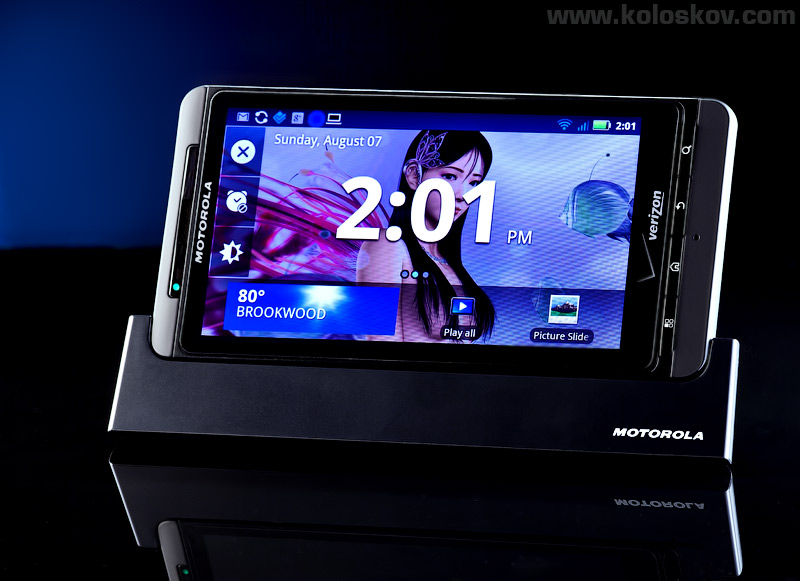
Do you remember my guest post for digital-photography-school.com? If not, here it is: How to Create an Eye-Catching Product Shot, I promised to get the same or similar photo without using any professional equipment. This weekend I spent less then hour getting it done. The result is below.
$55 lighting set result
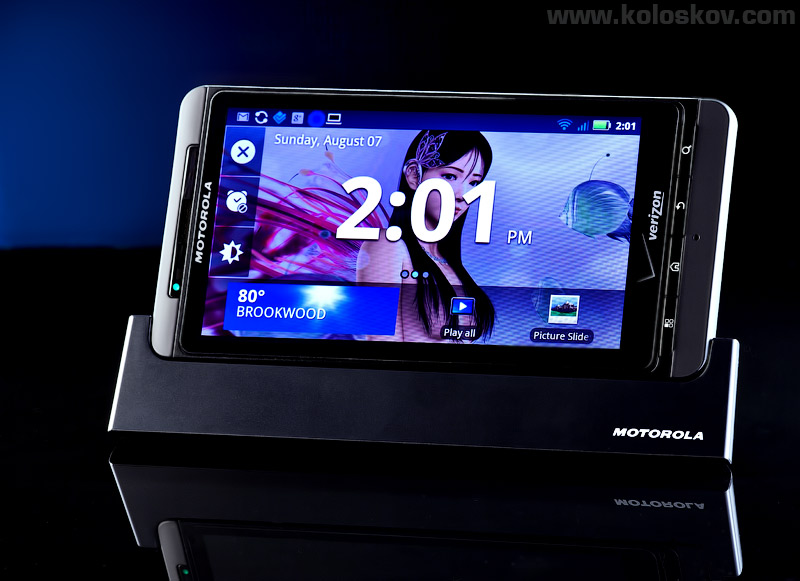
Professional photography without professional equipment
Not bad, is it? Instead of five light sources I used only four, which is why we are missing the spot under the phone.
Here is what I paid $55 in HomeDepot and this was my studio setup for this shot.
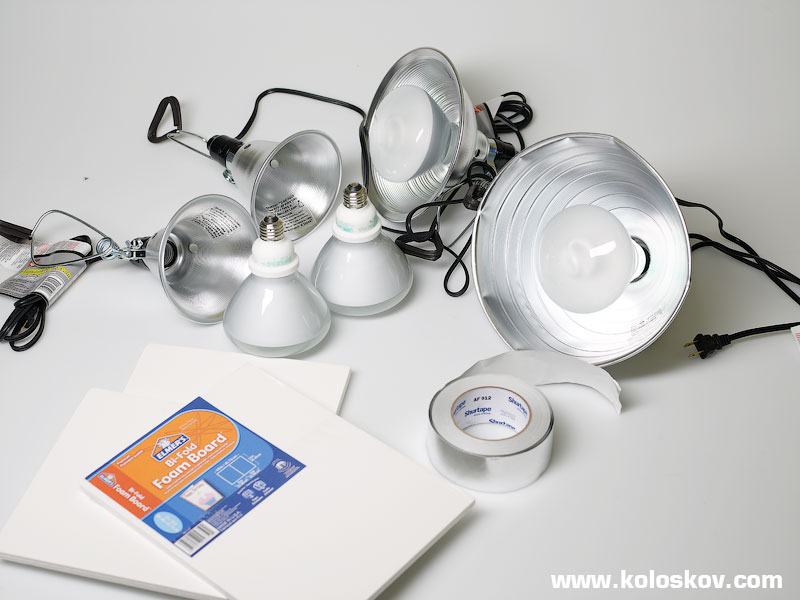
$55 lighting set
I didn’t include a few things, like a paper, office frames and the electricity bill, but you get an idea. This or similar items is what everyone already has at home.
I’ve selected fluorescent reflector bulbs, as they are much easier to work with (they are cold), but it can be any other bulbs. The only requirement for the lighting is to have the same color temperature, otherwise you won’t be able to balance them (talking about white balance of the image).
Now what is really needed to be good in tabletop photography?
The light modifiers. You may not need to use softboxes or diffusers, It can be virtually anything. I’ve used foam core board panels ($3 a piece) and transparent office picture frames, like this one:
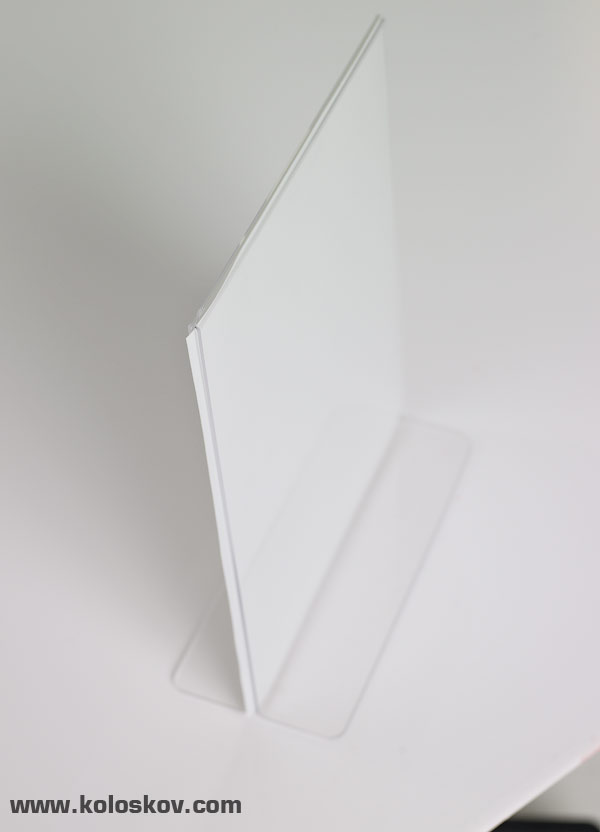
diy mini softbox by koloskov
I’ve stuck a piece of plastic in it, but it can be white paper or gel or whatever you have a fancy for:-) For my particular set, white semi-transparent plastic is what I needed -> (Savage diffusion roll).
The lighting setup
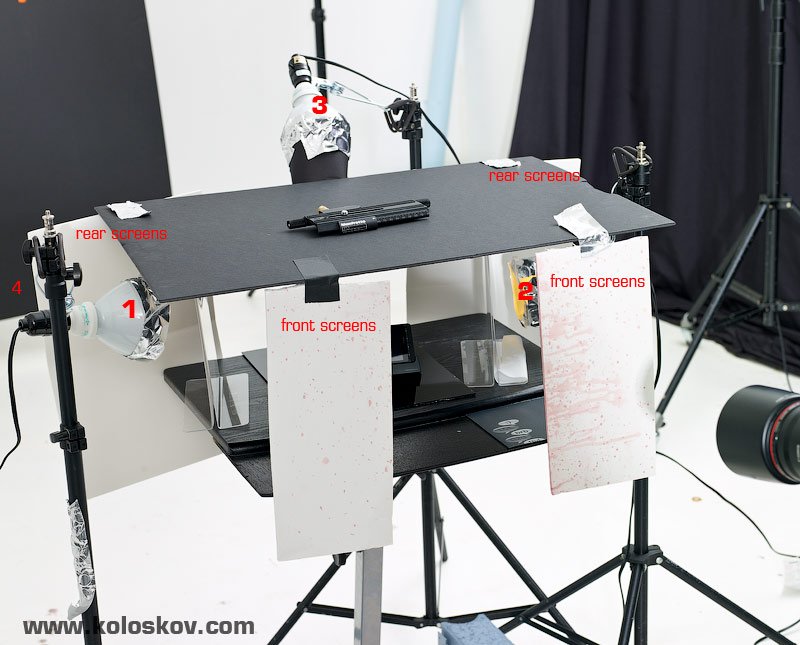
$55 dirty lighting setup for pro photographer:-)
As you see, the only real photographer’s thing was PCB light stands. I was too lazy to bring our dining chairs to the studio, but they will work with those lighting clamps maybe even better then the pro light stands. So, please don’t point at them saying that it wasn’t fair to use a piece of “real” equipment
I’ve used 4 lights:
#1 and #2 from both sides, same as softboxes were placed on the original, “pro” setup (you can take a look here). Because I’ve placed my “ghetto” softboxes much closer to the subject, the effective size was the same as from much larger Elinchroms I used earlier. To limit light spill, I’ve added an edge cover around my lamps, this helped to direct light to a front.
The screens on the front was needed to prevent light from hitting the camera lens directly. Ideally I would have preferred to do a barndoor-like screens (from the same aluminum foil tape and foam core board for each of the bulbs), but my solution was the most time effective. Plus, these front screens were reflecting the light back to the subject, highlighting the front of it.
The same with the rear screens: there were preventing light spill to dark background.
The light #3 was used to highlight top edge of the phone, same as softbox#3 on the “pro” shot. I’ve made a snoot-like modifier for it from a tape and black paper.
The light #3
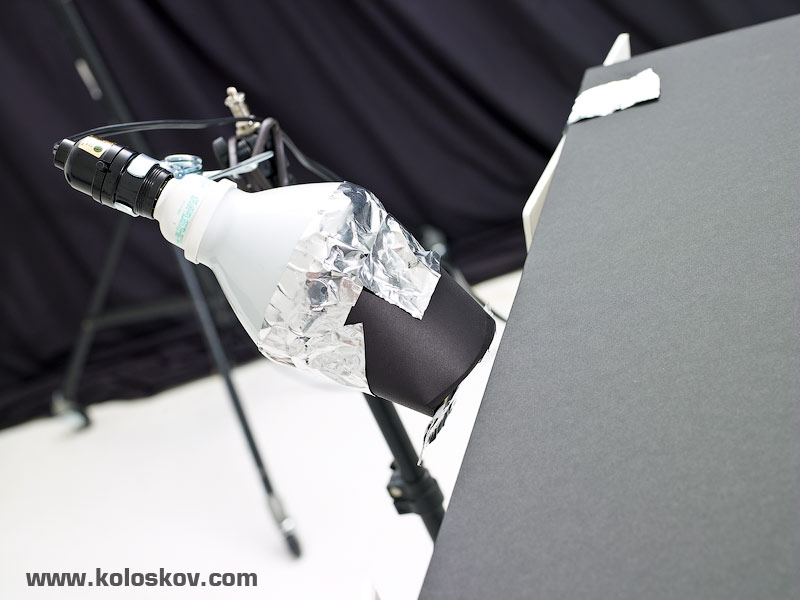
ghetto-snoot-mod-diy-by-koloskov
The light #4 was a snoot pointed to a background to create a spot on it. Two reflectors taped together and some color gel from screw-in strobe:
DIY snoot
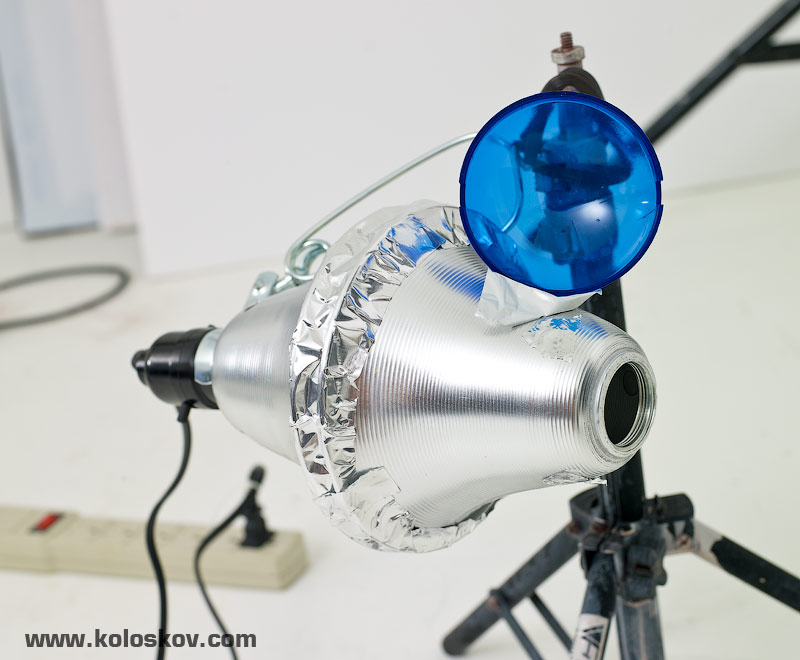
ghetto-snoot-by-koloskov
If I needed to modify a light spread from this DIY snoot, I would easily do this by adding a tube inserted in the snoot nose, made from black paper.
Side view of the lighting setup:
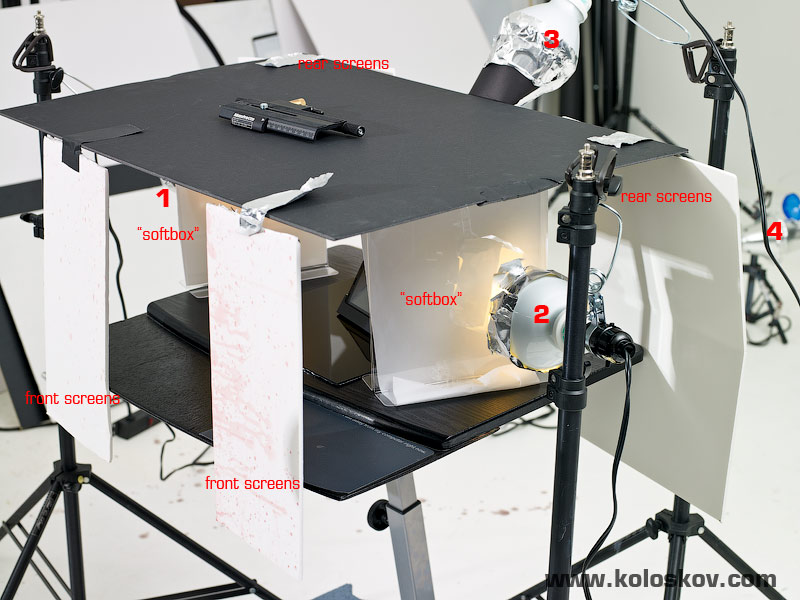
ghetto-lighting-setup-for-pro-results-by-alex-koloskov
How I was modifying the power of each light to get the ratio needed? Easy:-) I’ve covered the front of the bulb with that aluminum foil tape. Less opening – less light, and the opposite.
I purposely used the dirtiest pieces of cardboard I have. I used the cheapest $20 computer table as a shooting table solution. I only spent about 40 minutes to build the modifiers and the lighting setup. It was probably the most unprofessional approach to the tabletop photography I could squeeze out from myself. I did it so that i could show aspiring photographer’s that
It’s not the thousands dollar equipment which makes the image. It is a photographer behind the shot.
Nothing new, we hear it all the time, right? But when I read, under almost every post “I wish I could have that gear, and I would be able to shoot like this.”
It’s not the gear, it’s you. You’re not thinking out of the box and you who’s not wanting to spend time playing with the lights and stuff you already have. It’s fine if you spend every evening watching TV or playing your favorite computer games, but at least don’t lie to yourself saying that you can’t get the shot because you don’t have money or time to invest in your photography.
You do not need time. You need to decide. (C)~Seth Godin
Please don’t get offended. I am not trying to offend you, my friend. I write this in hope to “ignite” those of you who were waiting for this… Sometimes a small “push” is what you need:-)
If you’re wondering how much post-production was involved? Little bit more than the one done with $2000 lighting, but not by much. Below is as-is image of the phone. The second exposure one was used to capture phone’s screen: it was too bright for the exposure/lighting I had.
AS-is from camera RAW:
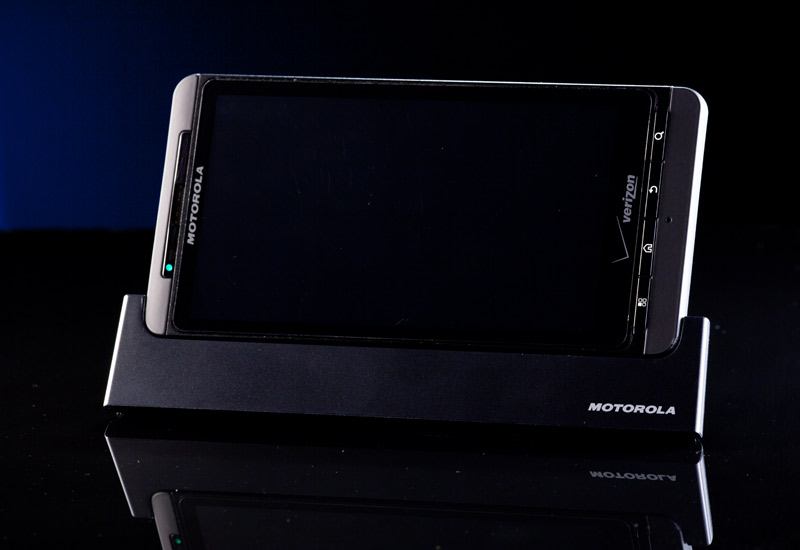
as-is phone, done with $55 lighting and no pro gear
And again, this is the final one:
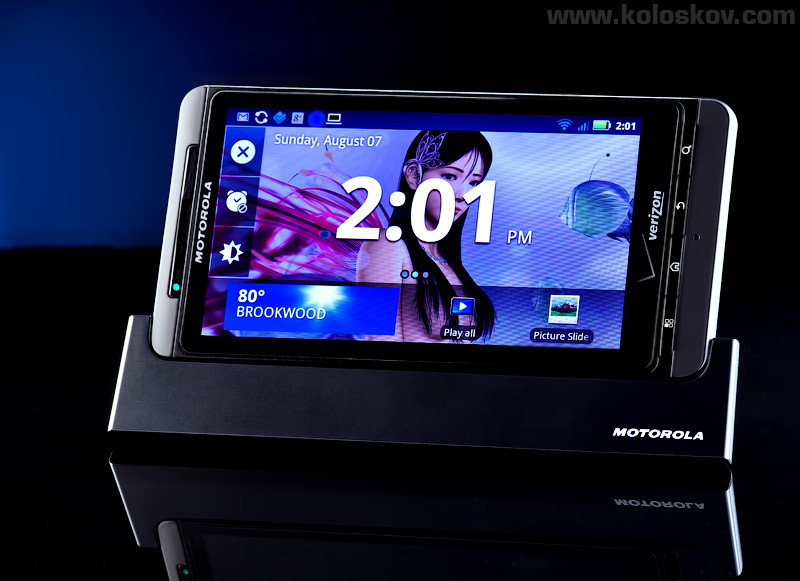
Professional photography without professional equipment
A few words about disadvantages of working with these lights: You need a very long exposure (2-5 seconds), meaning only still life can be captured. Mirror lockup and a steady tripod are good things for these shots as well.
I used a grey card to get correct white balance, as it’s hard to guess the color temperature of fluorescent lights. It will never match the bulb specification.
I hope this was as interesting for you as it was for me to put together. I’ll be using similar lighting in other shots as well, just to show you an alternative to a “professional” way to shoot. If you don’t want to miss them, simply subscribe to blog RSS feed or get post delivered by email
BTW, I have this great e-book for advanced photographers to learn how to deal with various tricky subjects in a studio, check it out if you one of these curious photographers:
Yours,
Alex Koloskov
P.S If you like this article, you may want to check another one: Do you really need an expensive DSLR camera? Point-and-shoot Vs professional DSLR
About The Author: Alex Koloskov
The lighting magician, owner of AKELstudio, Inc.


i love his idea
i realy admire this patinating photo
makes me more obsess with photography
I’m a photography student, just starting with the product lessons, and I most say I find your tutorials more inspiring and useful than many of my classes.
Thanks for all the knowledge you share with us, and for proving once more than creativity is the ability to solve problems.
“I write this in hope to “ignite” those of you who were waiting for this… Sometimes a small “push” is what you need:-) ”
…..Well, you could not be more right than this…. Last week you gave me “ignition”
, thanks for sharing your great knowledge and motivation!
Regards from The Netherlands.
Iwan
alex where did u buy those light sockets!?
@Michael, They should be for sale on any construction/home improvement store. Home depot (this is where I got them), Lowes and I also seen them in Walmart.
I am amazed. Can I use this to shoot say a bed room. Not exactly the same deal but can I use those lights to shoot an interior? How do you think that would work? I have a nikon d5100 and I want to take shootst of my bed and breakfast for my web site. I don’t really want it lit up as much as if it were for real estate because it would be too bright and not enough ambenance. What type of bulb would work. I am exceted about this. You are great.
@lindann,
For interior, you can use ambient and natural room lighting. I use to shoot a lot of commercial interiors, and was going HDR (multiple exposures) images to capture interiors with no additional lighting.
Price is not quit right:)
Could you do same setup without tripods and light stands?
@Alex, Yes, it can be done without tripods, if you have chairs at home:-) Just little bit of creativity should be applied.
Hi Alex,
. Thanks and keep it coming. All the best!!
Nice way of teaching how to be a pro in approach even with humble equipment, in fact I’m inspired like anything to try this out with my canon 550D
i will try this setup and tehniq but with smal flashes. is alway great to read your blog and folow your work.
Great article. Any chance to get a tutorial about cheap lighting that would be good enough for live models? I was trying myself taking modeling pictures for a friend without any professional lighting, it was a disaster…
Boris,
These particular lamps are too week to shoot models: you have to shoot at high ISO or have a long exposure (mine was 3.5 sec). Not good for a live model.
However, if you replace the bulbs to something like 200-500 watt, it will work with no problems.. Again, the light modifier is what important, not the bulb itself:-)
My next stop, home hardware store!!! Thank you so much for this tutorial. Have a great weekend.
Zuska
Alex,
Instead of using CFL lamps would the same results be achievable using Morris screw-in strobes? I don’t have any, but they are fairly inexpensive on B&H, about $70.00 US. These could be triggered by a speedlight, right? Do the Morris lights have better color temperature consistency?
Once again, thanks for the great information. You are very generous.
Regards,
Howard
Howard,
I remember I was using screw-in strobes (some $30 ones) long time ago, learned a lot while shooting with them.
Yes, any lighting will work. The key is the modifiers, not the light
Thank you!
i would love to see the same concept but with jewellery!! different kind of pieces, ring, bracelet etc,,, What do you say Alex?
Mike,
Yes, this type of lighting will work with jewelry without any problem. Whenever I’ll do, I’ll repeat it with this $50 lighting, jewelry won;t be exception.
Nice post Alex. In the museum photography field it is very common to have the latest and greatest equipment, while at my museum (due to a tight budget) I’m stuck with a 5 year old camera, 30 year old strobes and alot of foam-core board! So, it is nice to see that a professional can use the same stuff and get a good shot. My most used studio equipment? White seamless, black velvet and white foam-core board up to 4X8 feet (for large paintings, etc.).
Also, for all your readers trying to do photography with less, I would highly recommend USED equipment. Get the best camera body you can afford new (or very lightly used … check how many shutter clicks!), but then get used lenses which are often better than new ones (like my 20 year old 105mm Nikon-Micro), and you can find used tripods and studio stands everywhere.
J, yes, this is how I was starting: was buying very old and cheap stuff, learning skills and upgrading later.
Thank you!
You are a mad man Alex! This is a proof that you don’t need a pro equipment to get very good (similar) end result. Awesome shoot beautifully managed lighting set-up and well post processed. I new you will come up with something what will smash my feet lol! I am hungry for more but these time water shoots would be my snack if you know what I mean a pillar of water over white spinning around would that be possible to achieve? I have to say CONGRATULATIONS but also add that doing these shoot you have to have some light management knowledge, just a little bit at list :]. Good man, awaiting for more shoots. Many thanks for sharing you skills with us. Have a good one Alex!
Peter,
yep, knowledge is the key. This is what anyone can learn using such lighting:-) Time and motivation is only needed.
thank you!
Thank you so very much, Alex, for this great tutorial. You have inspired me from the first moment I found your website.
I have one question about this shot. What camera did you use for it? All I could afford is a Canon 40D with a 28-135mm f:3.5-5.6 kit lens. Do you think it is possible to get a shot from that camera/lens that would be good enough to build a respectable portfolio? I have the option of renting better equipment, but only for short periods of time due to the high cost (for me).
Al,
I was using Canon 5D MarkII. Any camera, even P&S would work for a portfolio. Check out this: Do you really need an expensive DSLR camera? Point-and-shoot Vs professional DSLR
You really do not need anything serious for web size image (i.e portfolio).
Try using black matt spray paint, a few dollars in the local car accessory shop…works a treat, but don’t touch the sprayed surface with your fingers…tends to leave marks!
Really interesting, Alex, appreciate not only you deciding to use your valuable time to create this shot but to share it with us all and kick us in the butt! (nicely, of course).
Hi Alex – Amazing! Not just making everything work but doing it so speedily too. You are an inspiration.
Very cool tutorial!
Thank you, Kendrick.
BTW, love your new website! very nice:-)
Are you going to join us on the Saturday shootout?
Hi Alex, this was great!
I’ve been looking for black foam core online, it’s not available where I live (non-US). Any suggestions on good places to buy?
@Marc, where do you live? i live in canada.. and here theres places with all kinds of colors of foam core
@Mike, Trinidad (Caribbean)
Marc,
There are few different stores where you can find foamborad in US: craft/hobby, art supplies, school supplies, office supplies.. all off them have it.. different colors.